Health Law Alliance attorney Anthony Mahajan is pleased to announce that federal prosecutors have declined to prosecute the CEO of a Florida specialty pharmacy for his involvement in an alleged scheme relating to Evzio, a drug used in the rapid reversal of opioid overdoses.
The Government’s Healthcare Fraud Investigation
Federal prosecutors for the U.S. Attorney’s Office for the District of Massachusetts alleged that the CEO and founder of a specialty pharmacy located in Pompano Beach, Florida (the “Pharmacy”), had participated in a scheme to defraud Medicare through the submission of false prior authorization forms for Evzio, a naloxone auto-injector manufactured by kaléo, Inc.
Specifically, federal prosecutors alleged that Evzio was the highest-priced version of naloxone on the market and payors frequently required prior authorization before they would approve coverage for Evzio.
According to the government, the Pharmacy employed several individuals as “patient navigators” who would would complete and submit prior authorization requests for Evzio, including forms that contained false clinical information.
Alleged Prior Authorization Healthcare Fraud
For example, the prior authorization forms falsely indicated that certain patients had tried and failed both Narcan and naloxone, and that other patients had previously been hospitalized or resided in areas with long wait times for emergency services.
Of note, the Pharmacy allegedly concealed that the prior authorization forms were being sent from the Pharmacy, not the prescriber, by listing the Pharmacy’s fax number in a field that requested the physician’s fax number, and by listing the name of a Pharmacy employee instead of the prescriber’s office contact.
Alleged Co-Pay Waiver Healthcare Fraud
Finally, federal prosecutors alleged that the Pharmacy had waived Medicare beneficiary co-payment obligations for Evzio on numerous occasions without analyzing whether the beneficiary had a genuine financial hardship.
According to the government, Medicare Part D plans would not have authorized payment for the prescriptions had they known that the Pharmacy had waived co-payment obligations absent individualized considerations of financial hardship.
Successful Defense of Healthcare Fraud Charges
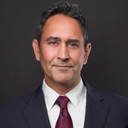
After an investigation that stretched over several years, the Pharmacy and CEO added Anthony Mahajan, a former federal prosecutor for the U.S. Attorney’s Office for the District of New Jersey, to their defense team.
After analyzing the case, Anthony engineered an innovative, $1.3 million civil settlement that permitted the Pharmacy to resolve the case in exchange for the government agreeing to drop criminal charges against the CEO.
In addition, as part of the agreement, HHS-OIG agreed not to exclude the Pharmacy and CEO from federal program participation. This result was reached only after the government fully appreciated that—based on Anthony’s experience and background—the Pharmacy and its CEO would not hesitate to take the matter to trial before a jury of their peers.
Trial is not for the faint-hearted, but neither is doing battle with the federal government. In short, at the Health Law Alliance, our mission is simple: We used to work for them. Now let us fight for you. Click here to learn how we can help.